Vietnamese
  English
  French
  German
  Spanish
  Portuguese
  Dutch
Dutch  Italian
  Russian
  Chinese
  Japanese
  Korean
  Indonesian
  Thai
Thai  Arabic
  Turkish
  Hebrew
  Hindi
Hindi 

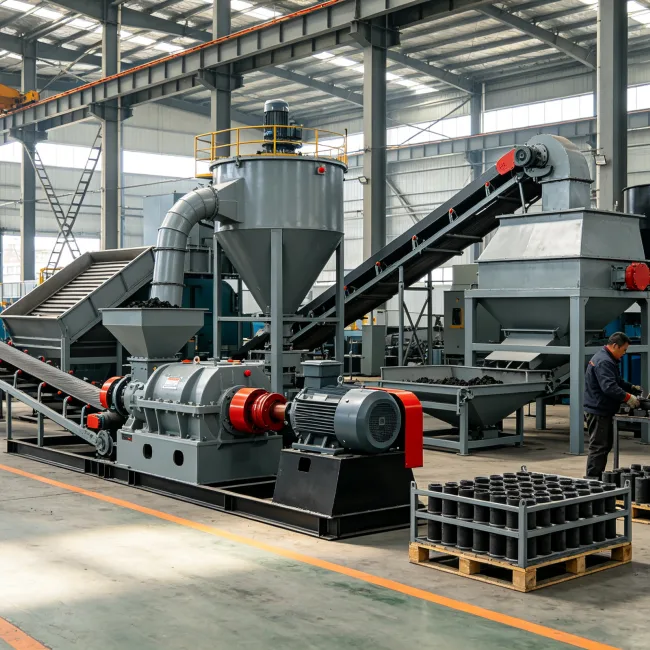
Main Purposes of Briquetting Machines
-
Recycle waste powder resources
A large amount of coal fines, charcoal dust, coke powder and mineral powder are produced during processing. These loose powders are hard to sell and easy to pollute the environment. The briquetting machine presses them into solid fuel briquettes to realize resource reuse and reduce waste loss.
-
Improve transportation and storage efficiency
Powdery materials occupy large space and are prone to leakage. After being pressed into regular briquettes, density increases greatly. The finished briquettes are convenient for stacking, loading and long-distance transportation, lowering logistics costs significantly.
-
Stable combustion performance as fuel
Uniform solid briquettes burn longer with less smoke compared with loose powder. It is widely used for domestic heating, industrial boiler fuel, metallurgical fuel and export BBQ charcoal production.
-
Convenient standardized sales and trade
Finished briquettes have fixed shapes and sizes, which makes quality control, packaging and bulk trade much easier. Many fuel merchants and overseas importers prefer standardized briquette products rather than messy powder raw materials.
Common Materials Processed by Briquetting Machines
- Coal dust, slack coal, lignite powder
- Charcoal powder, bamboo charcoal powder, coconut shell carbon powder
- Coke powder, mineral powder, iron ore powder
- Other carbon-containing powdery raw materials
Different Types of Briquetting Machines & Their Usage
Máy ép than dạng con lăn
Máy ép than bánh thủy lực
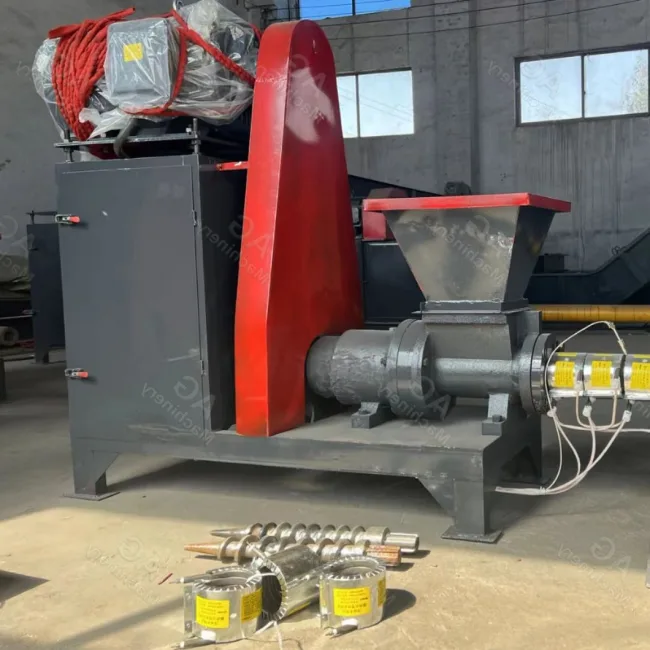
Máy đùn than bánh trục vít
Typical Application Scenarios
- Civil fuel supply factories
- Industrial boiler fuel processing plants
- BBQ charcoal manufacturing enterprises
- Mineral powder recycling factories
- Cross-border fuel briquette export manufacturers
Advantages of Investing in Briquetting Equipment
✅ Reduce material loss and environmental dust pollution
✅ Cut storage and transportation costs
✅ Produce marketable solid fuel for stable sales
✅ Support continuous automatic production when matched with auxiliary machines